
Dementia Test: How High is Your IQ?
3. [Time Perception Test] Guess The Year A Photo Was Taken
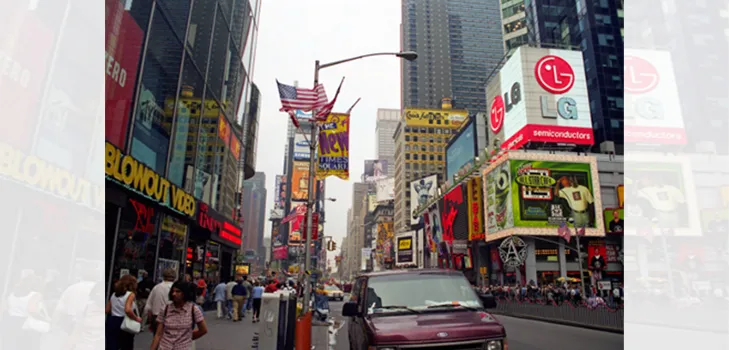
The photo pictured above was taken in 1999.
Intelligence is often mistaken for a single number, but in reality, it is a complex orchestra of various cognitive functions. As we enter old age, maintaining the vitality of these "brain muscles" means more than just scoring high on tests; it's about maintaining the ability to live independently and a high quality of life. Below, we break down the core abilities that define our cognitive health and how they manifest in our daily routines.
Linguistic and Visual Recognition
Language recognition goes beyond reading words; it involves the brain's ability to retrieve meaning and context at high speeds. Visual recognition, meanwhile, is the capacity to identify objects and patterns amidst clutter. In a trivia setting, this might mean spotting a hidden word; in real life, it is the ability to find a specific spice jar in a crowded pantry or recognize a familiar face in a photograph.
Temporal Perception and Orientation
Time perception is one of the most sensitive indicators of cognitive health. It involves more than just reading a clock; it is the internal "biological anchor" that keeps us connected to the flow of seasons, days, and hours. Maintaining a strong sense of orientation helps prevent the feeling of being "lost in time," providing a sense of security and stability in one's environment.
The Frontline: Attention and Memory
Attention acts as the gateway to all other cognitive functions. We focus on "selective attention," the ability to tune out background noise to focus on a single task. This works hand-in-hand with short-term working memory, which allows us to hold information, like a phone number or a list of three items, just long enough to use it. Strengthening these areas is vital for daily focus.
The Brain's Reflex: The Stroop Test
The Stroop Test is a classic psychological assessment of executive function. When the word "Blue" is printed in red ink, your brain must inhibit the automatic impulse to read the word and instead name the color. This measures "cognitive flexibility," the brain's ability to switch gears and manage conflicting information, a crucial skill for complex problem-solving.
Logical Reasoning and Spatial Awareness
Logic is the "hard drive" of intelligence, helping us see patterns and solve new problems. Spatial awareness, on the other hand, dictates how we move through the physical world. Whether it's judging the distance to a curb or visualizing how to pack a suitcase, these skills are essential for physical safety and navigation.
Emotional Intelligence and Social Decoding
A high IQ also includes the ability to interpret facial expressions and social cues. Understanding whether a person is happy, confused, or frustrated through their micro-expressions allows for deeper social connections. Staying socially active is one of the most effective ways to keep the brain engaged and resilient.
Functional Cognition: Real-World Self-Care
True cognitive health is best observed through activities of daily living (ADLs). Our assessment looks at how logic applies to the "real world":
- Supermarket Math: Managing change and calculating discounts.
- Item Recognition & Household Replication: Recalling the steps to brew tea or set the table.
- Traffic Light Test: Measuring the integration of visual cues with physical reaction time.
A Note on Health and Entertainment
While this test provides a rigorous "mental workout" and can offer insights into your cognitive strengths, it is important to remember that this is for entertainment purposes only. This quiz is not a clinical diagnostic tool for dementia or any medical condition. Intelligence scores can fluctuate based on fatigue, mood, or environment. For an official health assessment, please consult a healthcare professional.